
Quick answer: After hip or knee replacement, many people go home using a walker or crutches and still need help with bathing, toileting, and everyday movement. The safest equipment list is the one your surgeon, physical therapist, or occupational therapist confirms for your body, restrictions, and home—not a one-size-fits-all bundle.
The American Joint Replacement Registry's 2025 report analyzes more than 4.4 million hip and knee procedures collected from 2012 through 2024. A peer-reviewed summary of the 2023 registry reported that 93% of primary hip and knee replacement patients in that registry were discharged home. AHRQ has also identified total hip/knee replacement as the most common condition or procedure associated with discharge to post-acute care in its national analysis.
Sources: AAOS AJRR 2025; AJRR 2023 highlights; AHRQ 2023 report.
Before you order
- Confirm weight-bearing restrictions and the exact walking device.
- Ask for the correct device height and expected duration of use.
- Confirm whether a tub transfer bench, shower seat, raised toilet seat, or bedside commode is appropriate.
- Write down which transfers require a caregiver and which symptoms require medical help.
Do not substitute a rollator, cane, or furniture-walking for the device you were trained to use.
Equipment set to compare
This is a comparison set, not a prescription. Your care team should confirm the device, size, and when to use it.
1. Front-wheeled walker
Recommended equipment
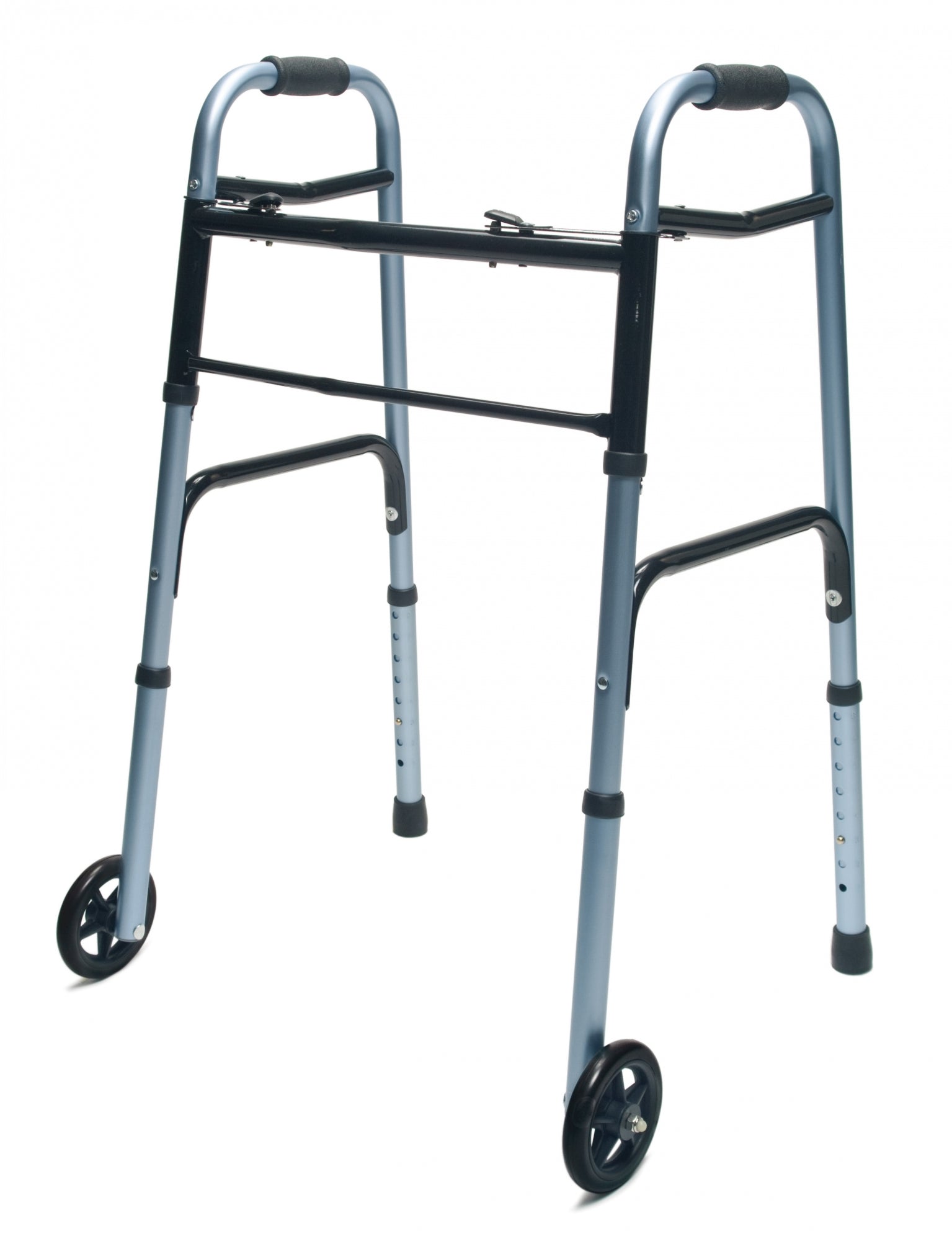
Lumex ColorSelect Adult Walker with Wheels
View product details →
A front-wheeled walker is a common early option when the goal is steady, controlled walking. The Lumex ColorSelect model adjusts from 32 to 39 inches and has a 300-pound capacity. Ask your therapist to set the height and show you the correct sequence before discharge.
View the Lumex front-wheeled walker
2. Raised toilet seat

Recommended equipment
Graham-Field Locking Raised Toilet Seat
View product details →
A raised surface may reduce how far you must bend at the hips and knees. This locking model adds 4.5 inches and is rated to 300 pounds. Confirm that it fits your toilet and your surgeon’s movement precautions.
View the locking raised toilet seat
3. Tub transfer bench
Recommended equipment
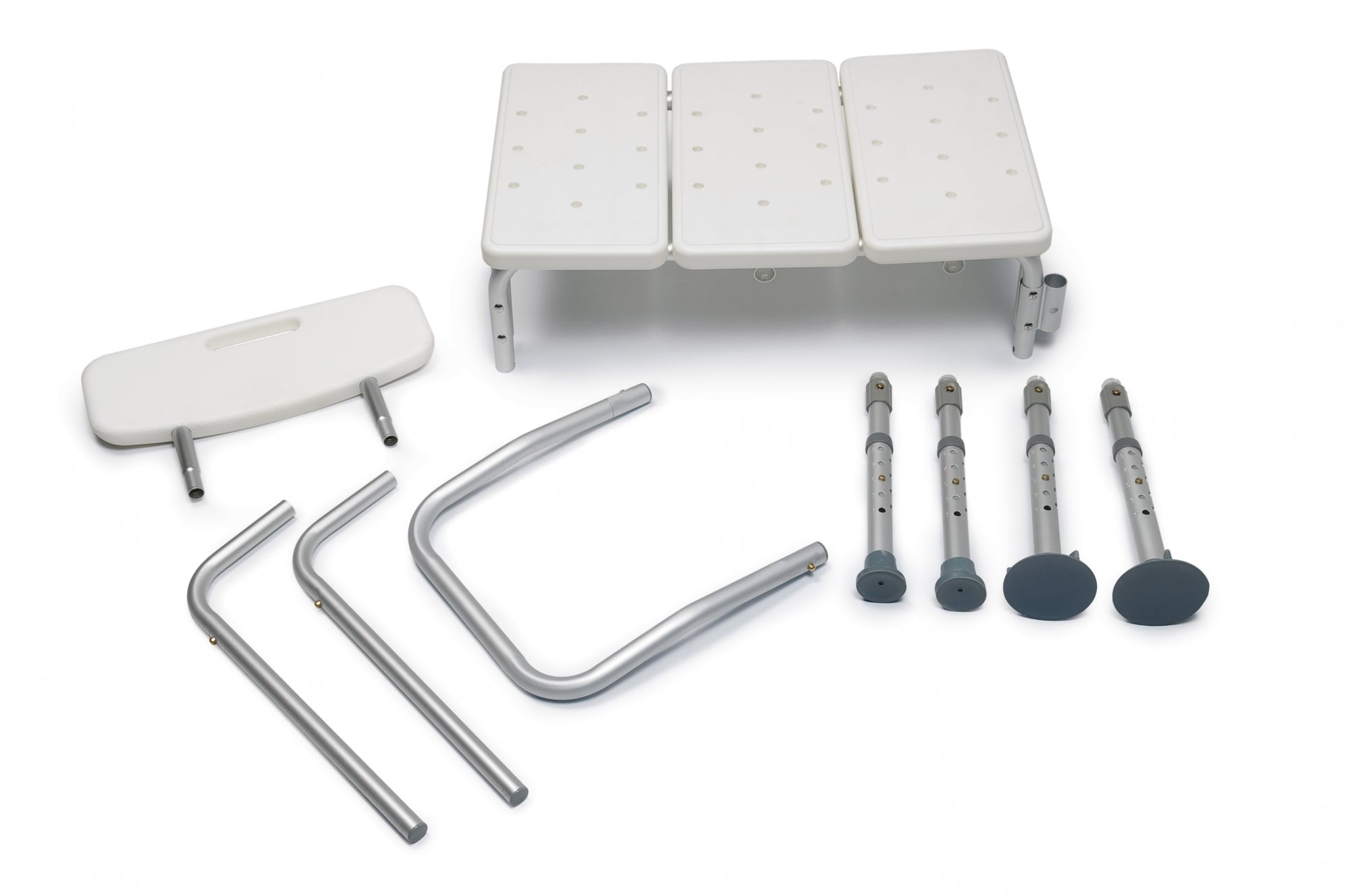
Graham-Field Knock Down Transfer Bench
View product details →
If the bathroom has a tub wall, a transfer bench lets a person sit before moving the legs into the tub. The Knock-Down Transfer Bench is rated to 350 pounds. Measure the tub, bathroom clearance, and seat height; confirm the direction of entry with your therapist.
4. Grab bars
Recommended equipment
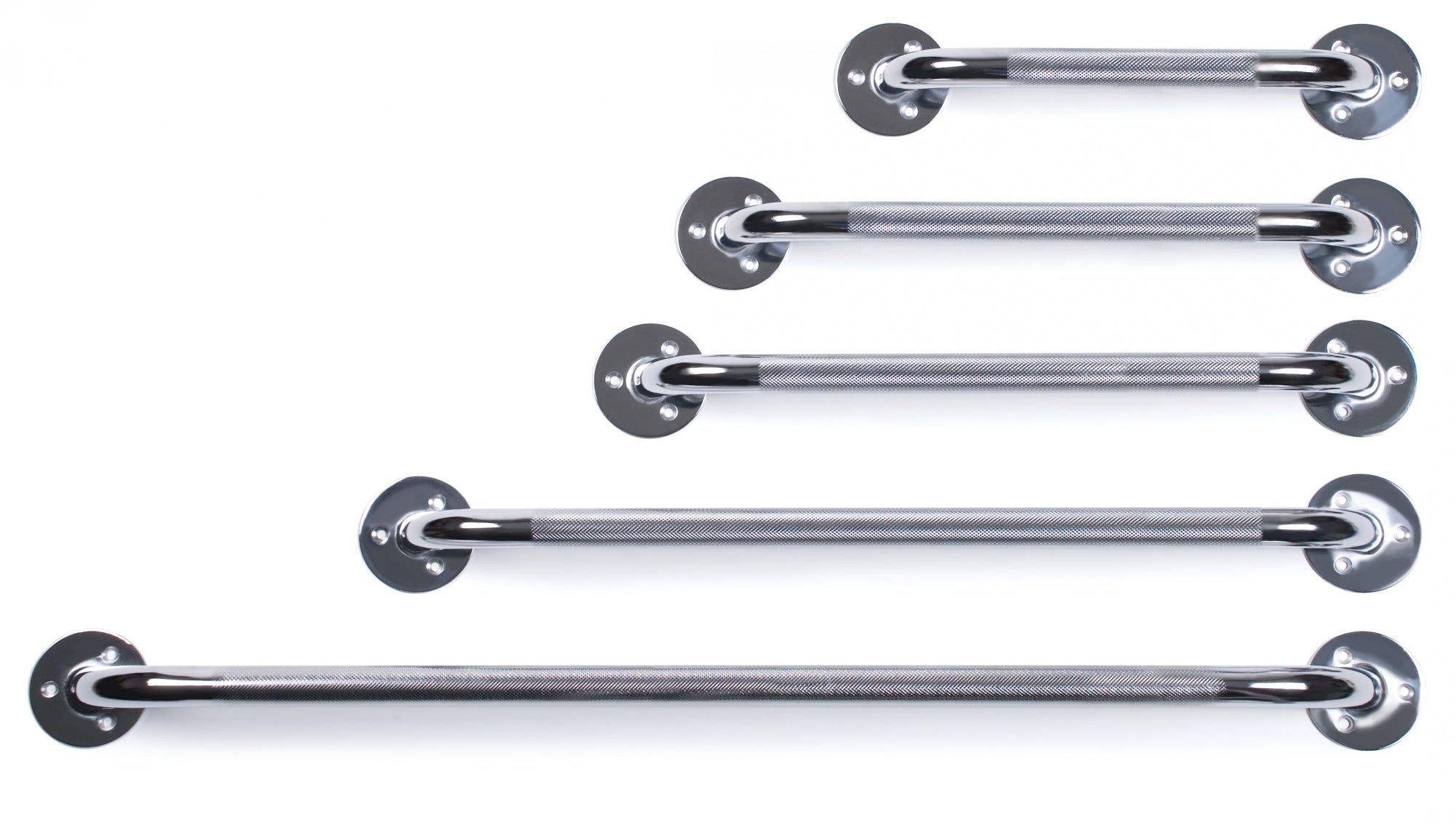
Graham-Field Grab Bars
View product details →
Properly installed grab bars provide a fixed handhold. This model is rated to 250 pounds when load is evenly distributed. Wall construction and mounting matter: installation should follow the manufacturer instructions and local requirements.
5. Optional 3-in-1 commode
Recommended equipment
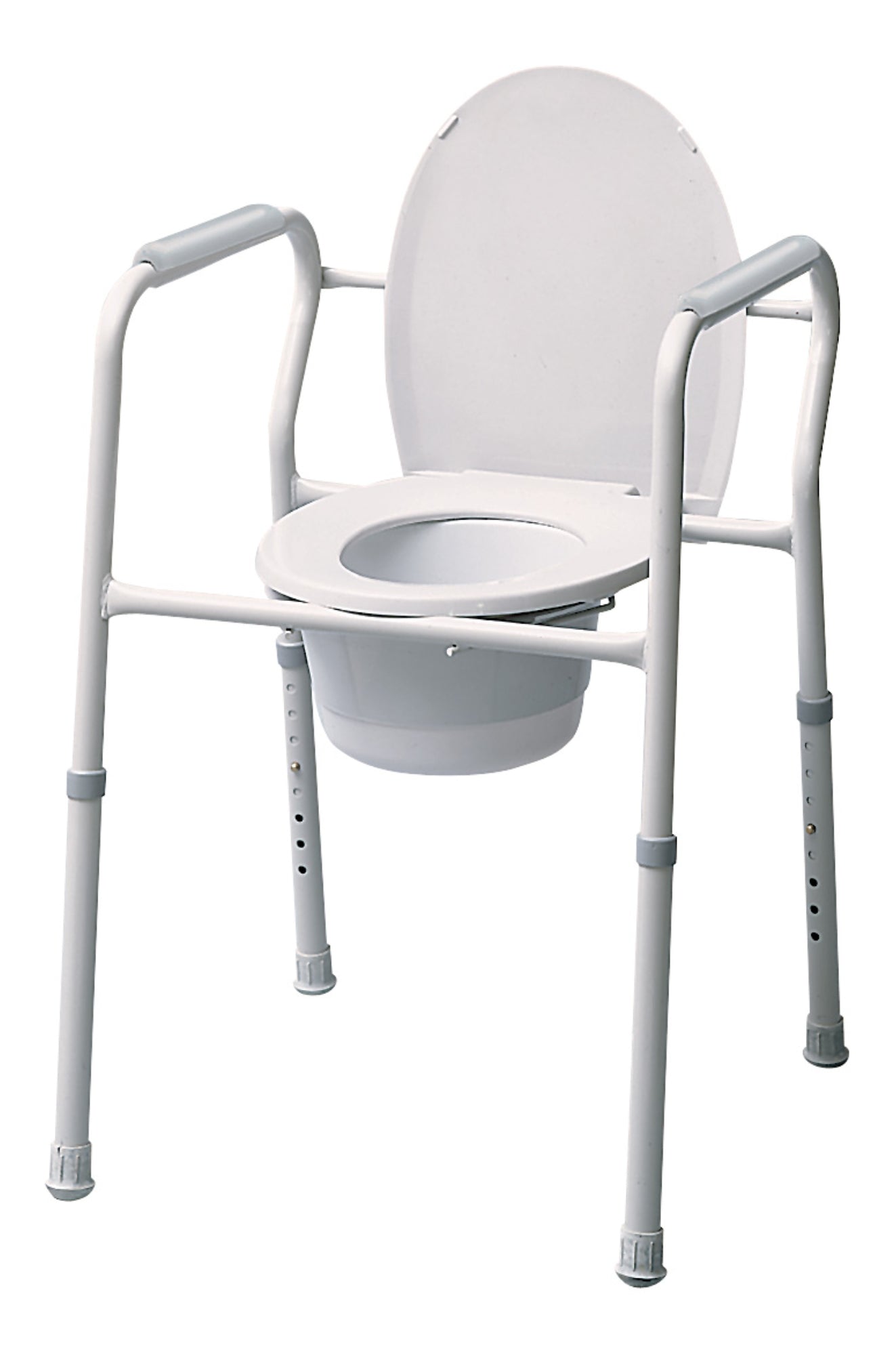
Silver Collection 3-in-1 Steel Commode
View product details →
A bedside commode can shorten nighttime trips; the same product can also function as a raised toilet seat or toilet safety frame. The Silver Collection 3-in-1 commode adjusts from 15.5 to 23.5 inches and is rated to 300 pounds. It should not block the walking route or create a new trip hazard.
Measure before checkout
- User height and weight, including any post-surgical brace.
- Doorway width and clear turning space.
- Bed, chair, and toilet seat heights.
- Tub-wall height and bathroom floor space.
- Which side must remain protected.
Set up the home before arrival
Clear cords, loose rugs, clutter, and small furniture from the route between bed, bathroom, kitchen, and the exit. Improve lighting, keep essentials within easy reach, and use a firm chair with arms. The CDC recommends removing fall hazards, improving lighting, installing grab bars, and discussing fall risk with a health professional.
Call the care team when something changes
Follow the discharge instructions for urgent symptoms. Contact the surgical team for increasing wound redness or drainage, fever, calf pain or swelling, chest pain, trouble breathing, a new fall, or a sudden loss of function. Call 911 for a medical emergency.
Payment and delivery notes
Medicare Part B may cover prescribed durable medical equipment that meets its rules when supplied by a Medicare-enrolled supplier. Home Medical Depot does not bill Medicare or private insurance, so review eligibility and reimbursement with the plan before ordering. Also check the current shipping and return terms, especially for hygiene-sensitive items.
Researching bed models for your home setup? Browse our hospital beds for home to compare dimensions, features, and listed components.
Sources
- AHRQ: 2023 National Healthcare Quality and Disparities Report
- AAOS: AJRR 2025 Annual Report
- MedlinePlus: Hip replacement discharge
- MedlinePlus: Knee replacement discharge
- CDC: Preventing falls
- Medicare: DME coverage
This guide is educational and does not replace individualized medical advice. Product availability, specifications, prices, shipping, and return terms can change.