
Quick answer: After a stroke, equipment must match the survivor’s affected side, balance, vision, attention, judgment, arm control, and caregiver support. Do not choose a cane, walker, gait belt, or wheelchair from diagnosis alone; ask the rehabilitation team to demonstrate the exact device and transfer method.
The CDC estimates that about 795,000 people in the United States have a stroke each year, and stroke is a leading cause of serious long-term disability. The American Stroke Association warns that as many as 70% of stroke survivors may fall during the first six months after hospital discharge and recommends a home assessment by an occupational therapist before discharge when possible.
Sources: CDC stroke measure definition; American Stroke Association home modifications; VA/DoD stroke rehabilitation guideline.
Four answers you need before ordering
- Which side is weak or affected, and can both hands safely grip a device?
- Does the person need supervision, one-person help, or two-person help for transfers?
- Can the person follow safety steps consistently?
- What is the safe plan for nighttime toileting and bathing?
Equipment is only one part of recovery. Therapy, medication management, caregiver training, and a clear emergency plan remain essential.
Equipment set to compare
This is a comparison list for the rehabilitation team, not a prescription.
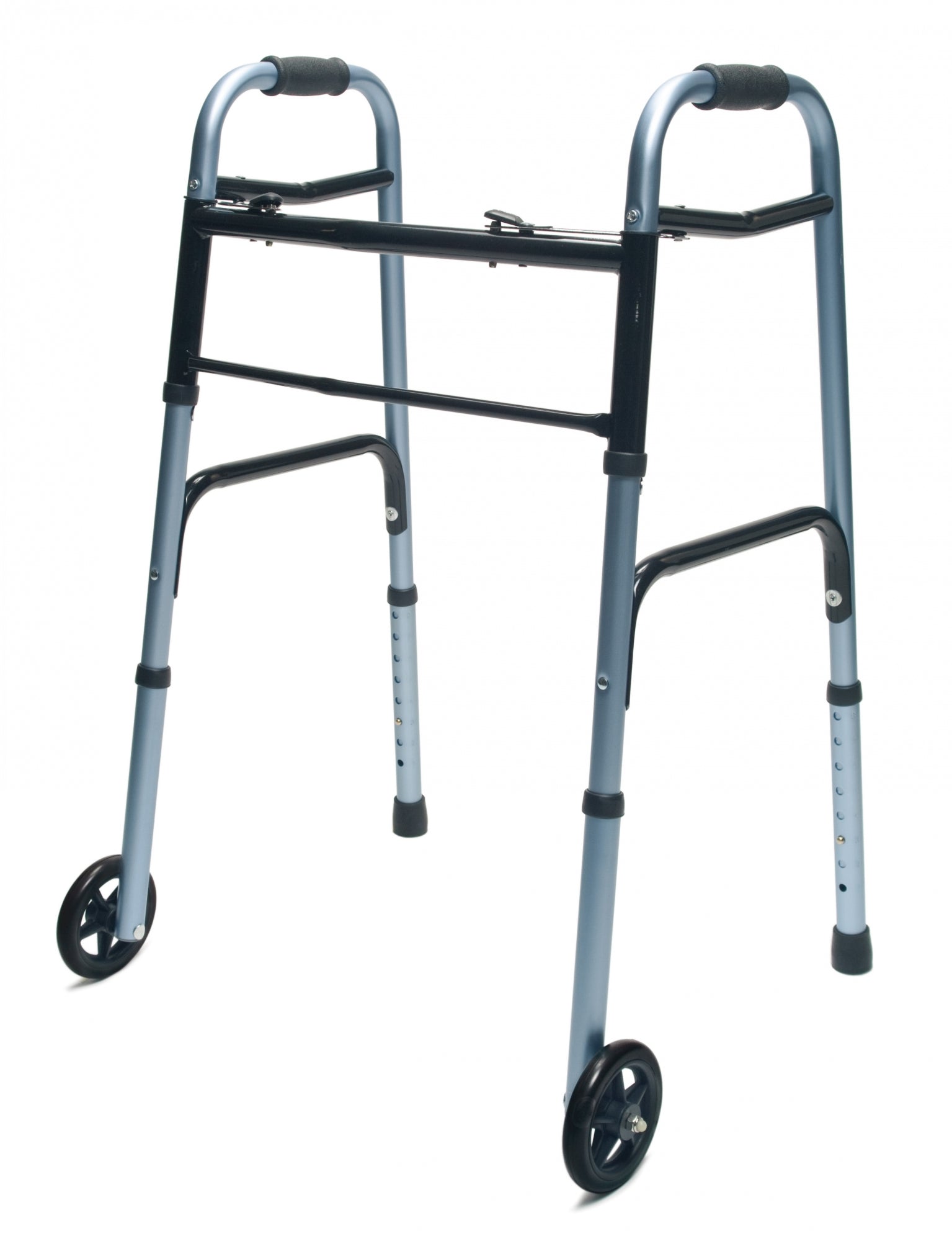
1. Prescribed walking aid

Recommended equipment
Lumex ColorSelect Adult Walker with Wheels
View product details →
Silver Collection Low Profile Quad Cane
View product details →
A front-wheeled walker may be appropriate when both hands can control it and the therapist has trained the survivor. The Lumex model adjusts from 32 to 39 inches and is rated to 300 pounds. A quad cane is a different tool and should be chosen only after gait assessment; stroke-related weakness on one side can change which hand and pattern are safe.
View the Lumex front-wheeled walker · View the low-profile quad cane
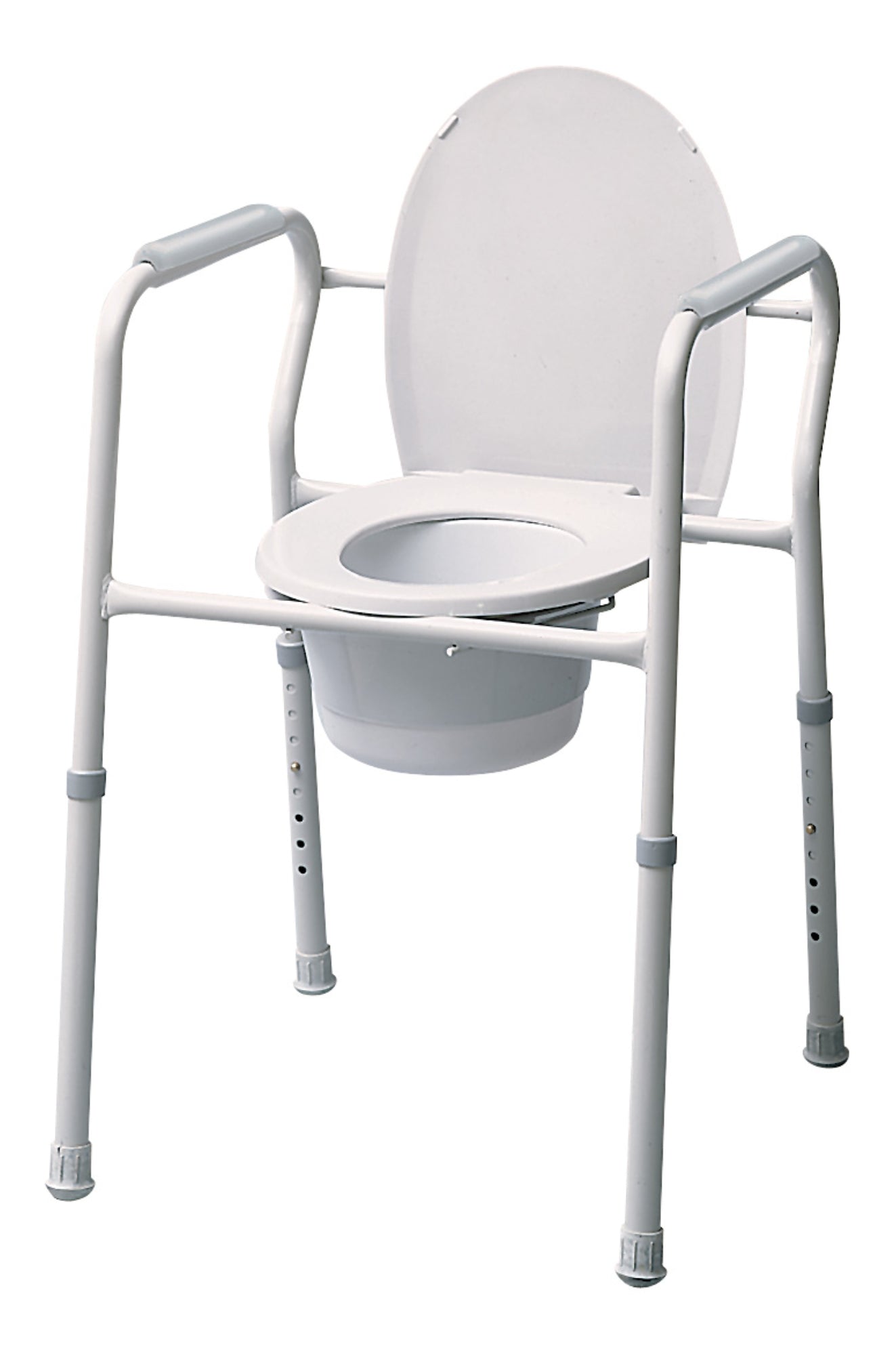
2. 3-in-1 commode
Recommended equipment
Silver Collection 3-in-1 Steel Commode
View product details →
A bedside commode can shorten the route at night and can also be used as a raised toilet seat or safety frame. This model adjusts from 15.5 to 23.5 inches and is rated to 300 pounds. The team should confirm placement, transfer direction, and whether supervision is required.
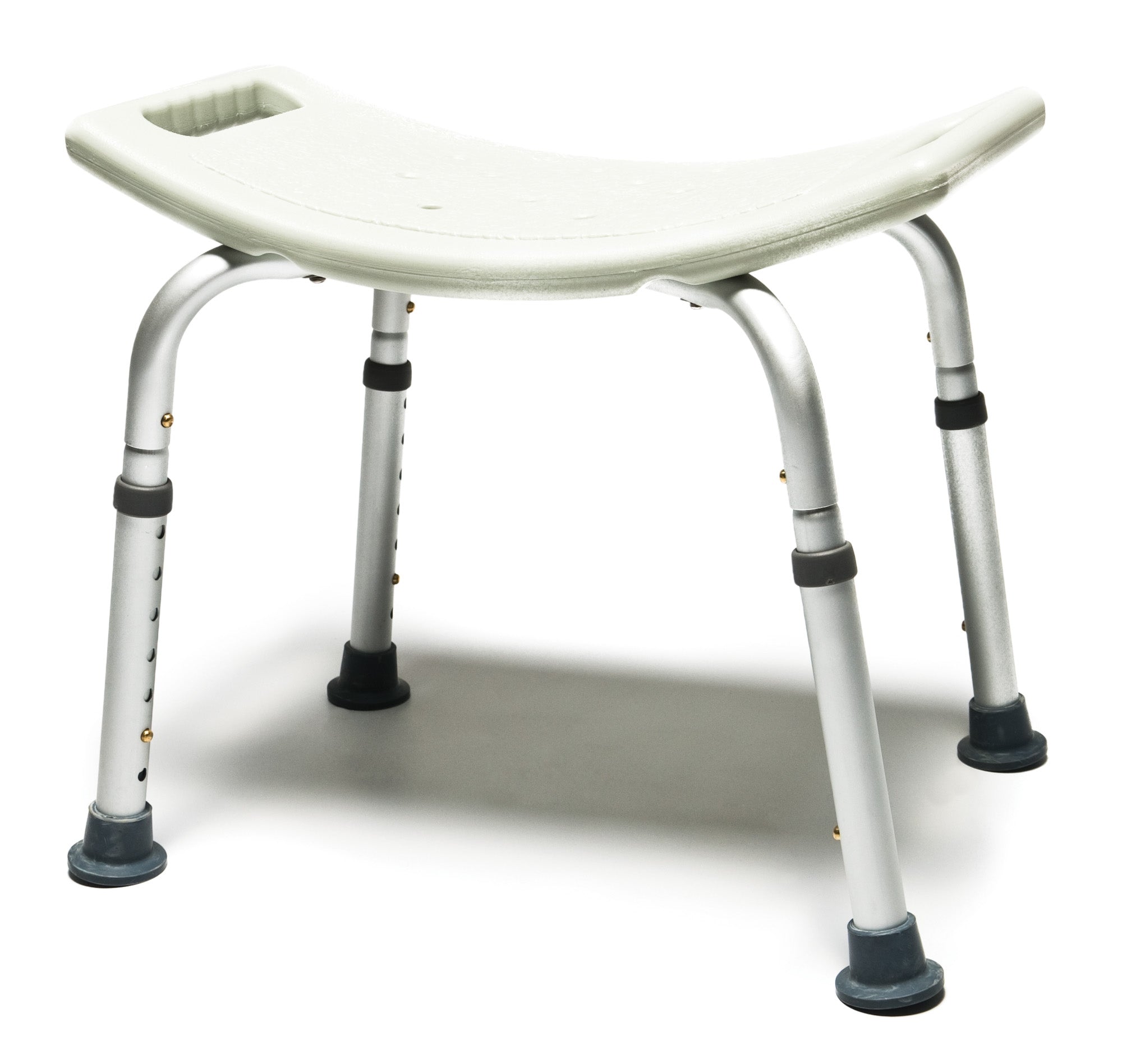
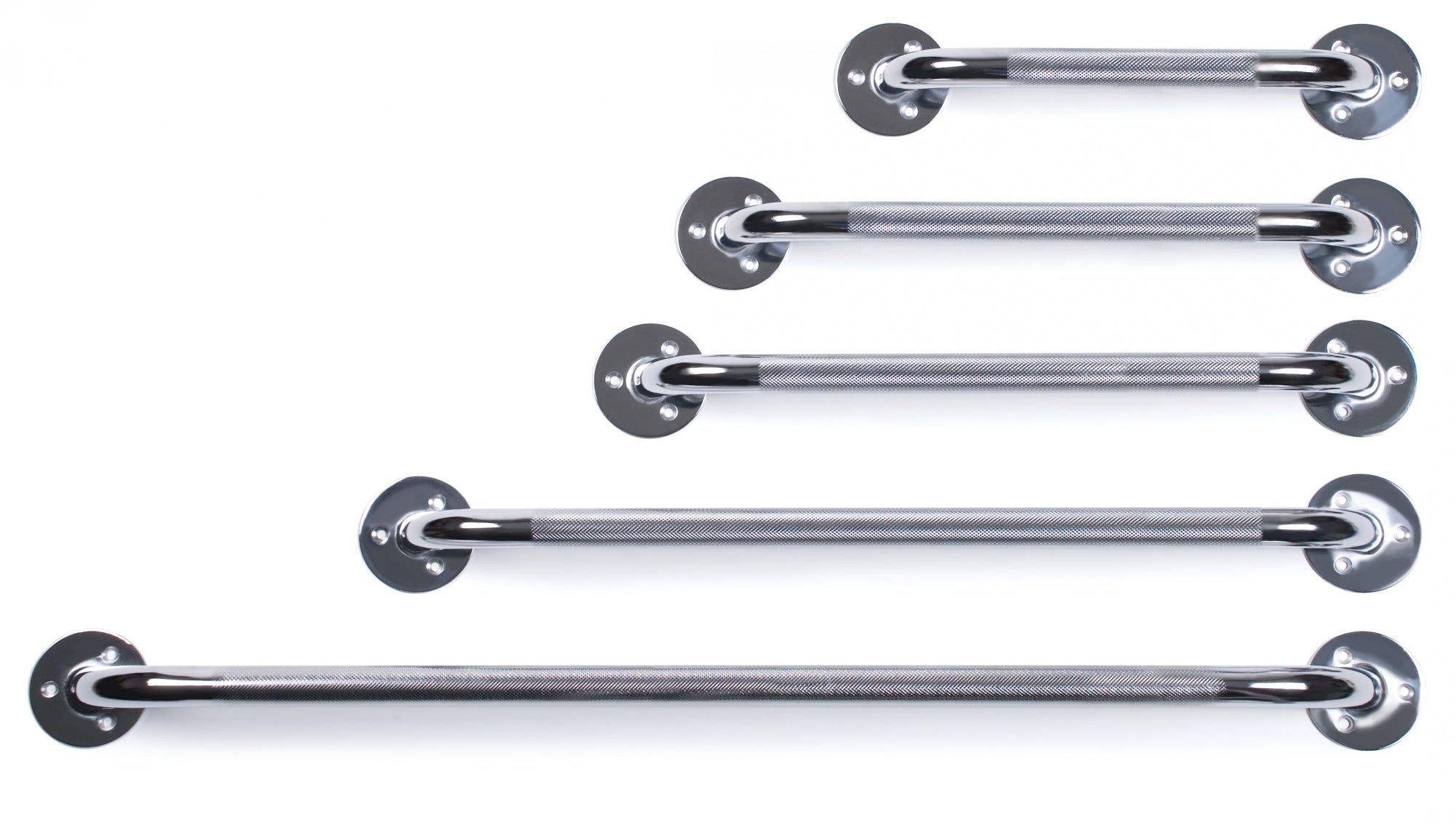
3. Bath seat and grab bars
Recommended equipment
Platinum Collection Bath Seat
View product details →
Graham-Field Grab Bars
View product details →
Sitting may reduce the balance demands of bathing. The Platinum Collection bath seat is rated to 350 pounds. Properly installed grab bars provide a fixed handhold; the listed bars are rated to 250 pounds with an evenly distributed load. Ask an occupational therapist where support is needed and measure the shower before ordering.
View the bath seat · View grab bars
4. Transport chair for companion-assisted mobility
Recommended equipment
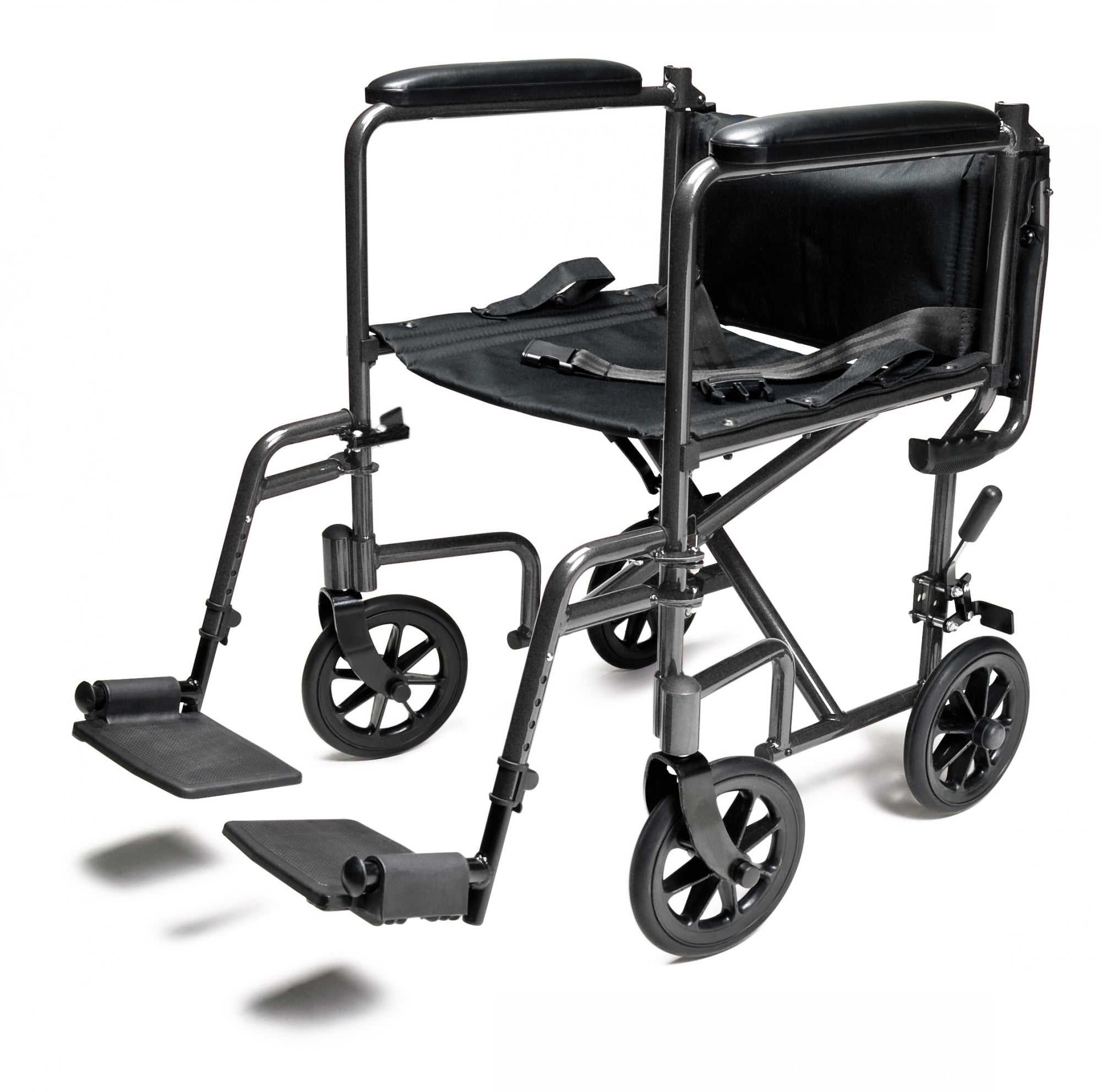
Everest & Jennings Steel Transport Chair
View product details →
A transport chair may help with appointments or distances the survivor cannot safely walk. The Steel Transport Chair must be pushed by a companion; it is not a self-propelled wheelchair. Confirm seating support, transfer method, doorway clearance, weight capacity, and caregiver ability.
View the steel transport chair
5. Gait belt—only after hands-on training

Recommended equipment
Graham-Field Gait Belt
View product details →
A gait belt can give a trained caregiver a controlled handhold during an approved transfer or walking task. It is not a lifting strap and may be inappropriate with some surgeries, feeding tubes, fragile skin, abdominal conditions, or other medical issues. Use it only when the rehabilitation team has checked the fit and trained the caregiver.
Home changes that matter
- Clear wide routes and remove loose rugs, cords, and clutter.
- Improve lighting and contrast, especially between bed and bathroom.
- Place commonly used items where the stronger, safer side can reach them.
- Use fixed grab bars and stable seating—never towel racks or loose furniture for support.
- Post the transfer instructions and emergency contacts where caregivers can see them.
The American Stroke Association recommends assessing entrances, doors, hallways, stairs, bedrooms, bathrooms, kitchens, and outdoor access. A home visit can reveal needs that a generic shopping list cannot.
Know the emergency plan
Call 911 immediately for new stroke signs: face drooping, arm weakness, speech difficulty, sudden trouble seeing or walking, a sudden severe headache, or any other sudden neurological change. Do not drive the person to the hospital unless emergency services instruct you to do so.
Payment and delivery notes
Medicare Part B may cover prescribed durable medical equipment that meets its rules when supplied by a Medicare-enrolled supplier. Home Medical Depot does not bill Medicare or private insurance. Check plan requirements, delivery timing, fit, and current return terms before ordering.
Researching bed models for your home setup? Browse our hospital beds for home to compare dimensions, features, and listed components.
Sources
- CDC: Stroke measure definition
- CDC: Stroke treatment
- American Stroke Association: Home modifications
- VA/DoD: Stroke rehabilitation guideline
- AHRQ: 2023 National Healthcare Quality and Disparities Report
- Medicare: DME coverage
This guide is educational and does not replace individualized medical advice. Product availability, specifications, prices, shipping, and return terms can change.